Top Crypto Assets to Trade in India in 2026: Beginner Overview

Summary Box
| As per a recent report on ”State of Crypto” in India (released for H1 2026), the five crypto assets worth studying are: Bitcoin (BTC)Ethereum (ETH)Tether (USDT)XRP, and Solana (SOL) You can trade crypto assets on the Trade246 platform at lifetime zero* brokerage. To get started, register on the platform and complete your KYC verification. Post-successful registration, you can log in to your account and access Bitcoin, Ethereum, XRP, Solana, and 50+ other digital assets from your dashboard (available under the “International Markets” tab). *Statutory taxes and charges may apply |
Firstly, let’s start with learning: What are crypto assets? These are digital assets that exist on “electronic networks” and use cryptography to secure transactions. They are usually built on blockchain technology, which is a digital record of transactions maintained across a network of computers.
Some common examples are: Bitcoin (BTC), Ethereum (ETH), Solana, XRP, and more. Unlike physical assets such as gold, crypto assets exist in digital form. But which asset can beginners trade in 2026? Read this article to learn about the top 5 crypto assets you may consider.
Top 5 Crypto Assets to Trade in 2026
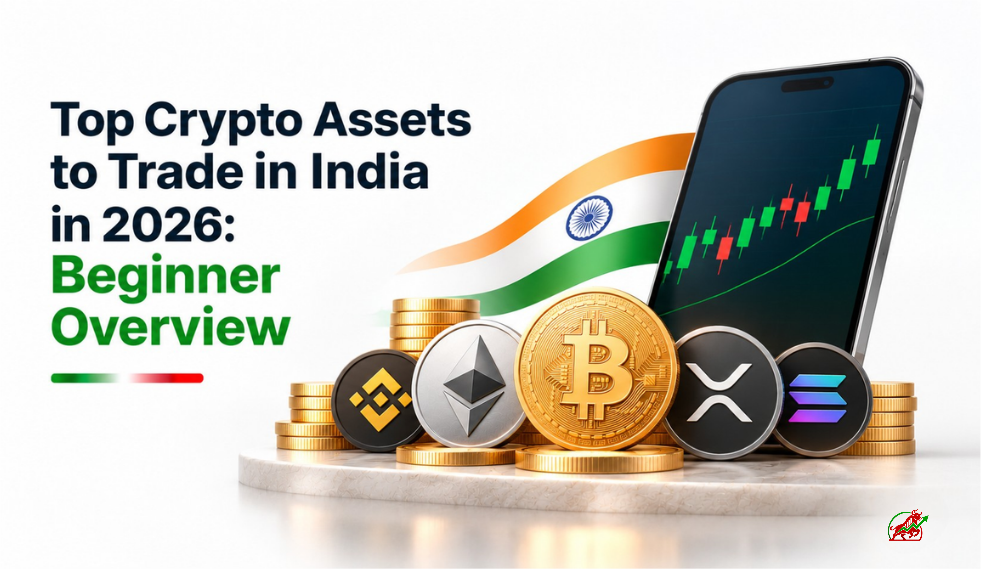
According to a ZebPay Report on ”State of Crypto” in India (released for H1 2026), for investors in India, five assets worth studying are:
- Bitcoin (BTC)
- Ethereum (ETH)
- Tether (USDT)
- XRP, and
- Solana (SOL)
Let’s understand how each asset is used in trading, why it attracts interest, and what risks investors should consider:
| Crypto Asset | What It Does And How Traders Use It | Why it Attracts Indian Traders (according to ZebPay’s H1 2026 report) | Main Risks |
| Bitcoin (BTC) | Bitcoin is the first and largest cryptocurrency by market capitalisation.Most traders buy or sell BTC to potentially benefit from price movements and market trends. | BTC had the highest trading volume among the listed growth-oriented crypto assets. Its trading volume was roughly four times that of Ethereum, despite a similar number of traders. | Its price can rise or fall sharply due to global economic events, investor sentiment, and regulatory developments. |
| Ethereum (ETH) | Ethereum is a blockchain network that supports smart contracts and decentralised applications [including decentralised finance (DeFi)].Traders buy and sell ETH to gain exposure to its price movements. | ETH is the third-most-traded asset in H1 2026.It is another major cryptocurrency for traders who want exposure to blockchain technology beyond Bitcoin. | ETH can experience sharp price swings.Network fees, competition from other blockchains, and changes in demand can also affect its price. |
| Tether (USDT) | Tether is a “stablecoin” designed to maintain a value close to US$1.Traders use it as a trading pair to buy or sell other cryptocurrencies.It also serves as a temporary holding asset between trades. | USDT was ranked first by trading volume in H1 2026. Its role in crypto trading pairs makes it important for transactions on the exchange. | As per general market understanding, USDT is not designed for long-term price growth.Its value may move away from US$1.Also, concerns about reserves, the issuer, or redemption can create risks. |
| XRP | XRP is a digital asset associated with the “XRP Ledger”.This ledger is a blockchain used for payments and other transactions.Traders may buy or sell XRP based on expectations about payment adoption and regulatory developments. | It is the fourth-most-traded asset in H1 2026. Interest in payment-related blockchain use cases contributes to its trading activity. | Its price may react to regulatory decisions, adoption levels, competition, and market sentiment. |
| Solana (SOL) | Solana is a blockchain network designed to support smart contracts and decentralised applications. SOL is its native cryptocurrency.Usually, it is traded for exposure to the network’s growth and price movements. | SOL was ranked as the fifth-most-traded asset in H1 2026.It attracts traders interested in blockchain applications and an alternative to Ethereum. | SOL can be highly volatile.Network disruptions, technical issues, competition, and changes in demand can affect its price. |
4 Things to Consider Before Trading Crypto Assets in India
Cryptocurrency trading involves more than selecting a coin and predicting its next price movement. Traders may consider these five factors before getting started:
1. Understand the Risk of Price Volatility
The prices of crypto assets are highly volatile and can change sharply within a short period. For example,
- On October 22, 2026, Yahoo Finance reported that Bitcoin fell below US$82,000. It declined by more than 3% over 24 hours amid geopolitical tensions and a broader sell-off in riskier assets. The report also noted approximately US$400 million in crypto liquidations over the same period. (Source: Yahoo Finance report, dated October 22, 2026)
- On February 2, 2026, Reuters reported that approximately US$2.56 billion in Bitcoin positions had been liquidated over recent days as cryptocurrencies fell alongside other risk assets. (Source: Investing.com)
Such price swings highlight the volatility of crypto markets and the potential for investors to incur substantial losses. Thus, investors may assess how much they can afford to lose before committing funds. Also, they should avoid making trading decisions based solely on “online hype”.
2. Check the Exchange and Its Security
The crypto exchange determines how trades are placed, what fees apply, and how assets are stored or withdrawn. Before opening an account, you may examine the platform’s:
- Security measures
- Withdrawal rules
- Brokerage
- Customer support, and
- Compliance status
Additionally, you may use strong passwords and two-factor authentication wherever available.
3. Calculate Trading Costs and Taxes
Trading costs may include exchange fees, bid-ask spreads, deposit or withdrawal charges, and other applicable costs. These reduce the amount earned from profitable trades and can increase losses.
Additionally, investors must also consider the tax rules applicable to virtual digital assets (VDAs). Currently, as per Section 115BBH of the Income Tax Act, 1961, a flat 30% tax is applicable on gains from VDAs (plus surcharge and cess). Also, a 1% TDS is deducted under Section 194S.
4. Review Liquidity Before Buying or Selling
Liquidity refers to how easily an asset can be bought or sold without causing a substantial change in its price. Highly traded cryptocurrencies usually have more “active buyers and sellers”, while smaller tokens may have limited trading activity.
Low liquidity can lead to a wider bid-ask spread or a trade executing at a less favourable price than expected. You may check trading volume and available market depth before trading any crypto asset.
Trade 50+ Crypto Assets on Trade246 at Lifetime 0* Brokerage
So now you know which crypto assets you may potentially start exploring as a beginner. If we were to revise, Bitcoin (BTC), Ethereum (ETH), Tether (USDT), XRP, and Solana (SOL) may be worth considering based on the State of Crypto in India report released for January to June 2026.
Crypto asset trading is available on Trade246 through its “International Markets” section. After registering and completing the required KYC verification, users can access the trading dashboard to place buy or sell orders [using Market, Limit, and Stop-loss (SL) order types].
The minimum deposit is ₹1,000. You can even open a free demo account to first familiarise yourself with the platform features and real market conditions.
*Statutory taxes and charges may apply
Crypto Assets Trading FAQs
1. Which crypto assets can beginners consider trading in India?
As per recent studies, beginners may study Bitcoin (BTC), Ethereum (ETH), Tether (USDT), XRP, and Solana (SOL).
However, the potentially right choice depends on an investor’s risk appetite and financial goals. Realise that crypto assets are highly volatile, and past trading activity does not guarantee future returns.
2. How can investors trade crypto assets on Trade246?
Register on the platform and complete the required KYC verification. Sign in to access the dashboard and open the International Markets section. Locate a list of several crypto assets (along with their live prices) under the heading of “Crypto”.
Select Buy or Sell, choose an available order type, and enter the required details. Lastly, review the order before submission.
3. What is the minimum deposit required to trade crypto on Trade246?
The minimum deposit on Trade246 is ₹1,000.
4. Is KYC required for a demo account on Trade246?
No, KYC verification is not required to access a demo account on Trade246. However, to start live trading and deposit or withdraw funds, users must first complete the required KYC verification.